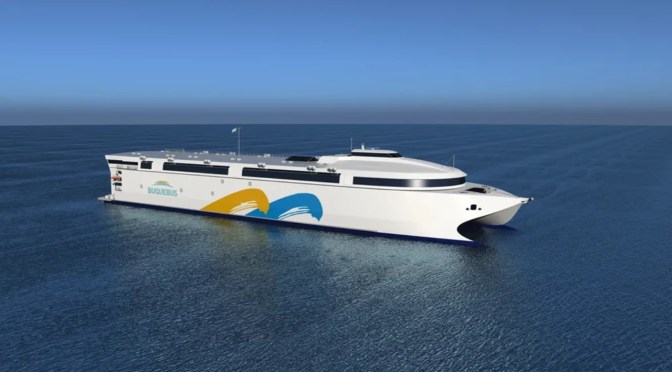
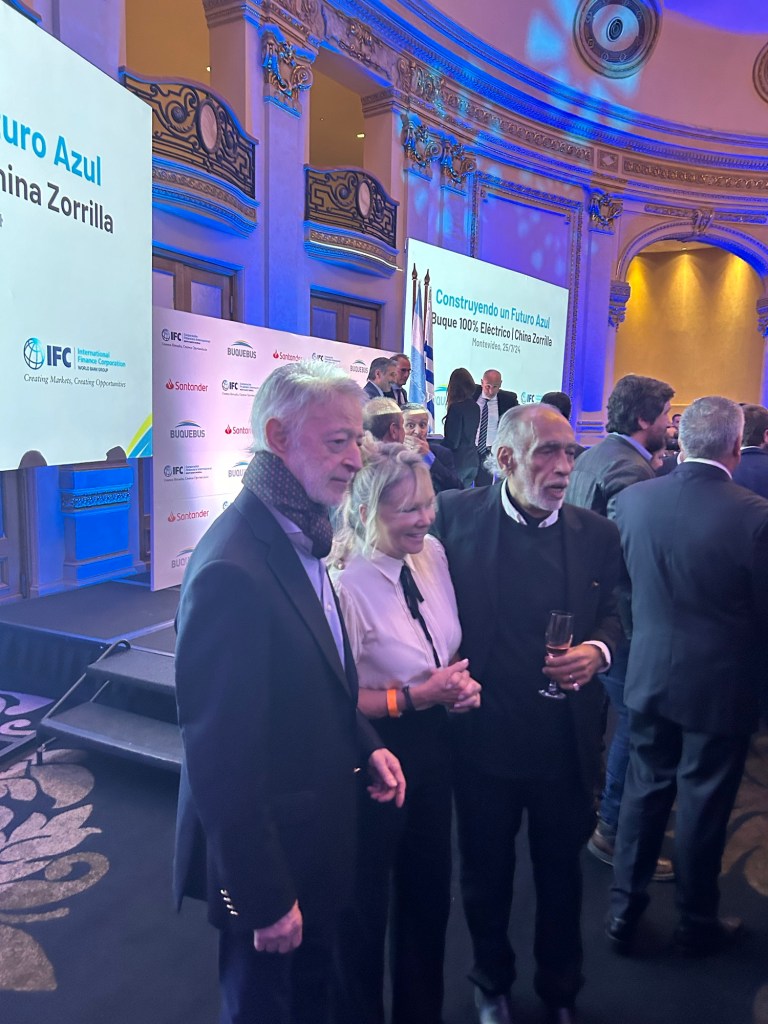
El pasado jueves 25 de julio BUQUEBUS presentó en los salones del Hotel SOFITEL de Carrasco en Montevideo el nuevo barco eléctrico más grande del mundo, que se llamará China Zorrilla en homenaje a la querida actriz uruguaya que unió las dos márgenes del Plata.
El sector de transporte marítimo en Argentina y Uruguay está experimentando un importante impulso con la construcción del ferry eléctrico más grande del mundo, que unirá las ciudades de Buenos Aires y Colonia del Sacramento. Esta mega inversión de más de 170 millones de dólares, liderada por Buquebús y Banco Santander con el respaldo financiero de la Corporación Financiera Internacional (IFC), marca un hito en la industria naviera de la región.
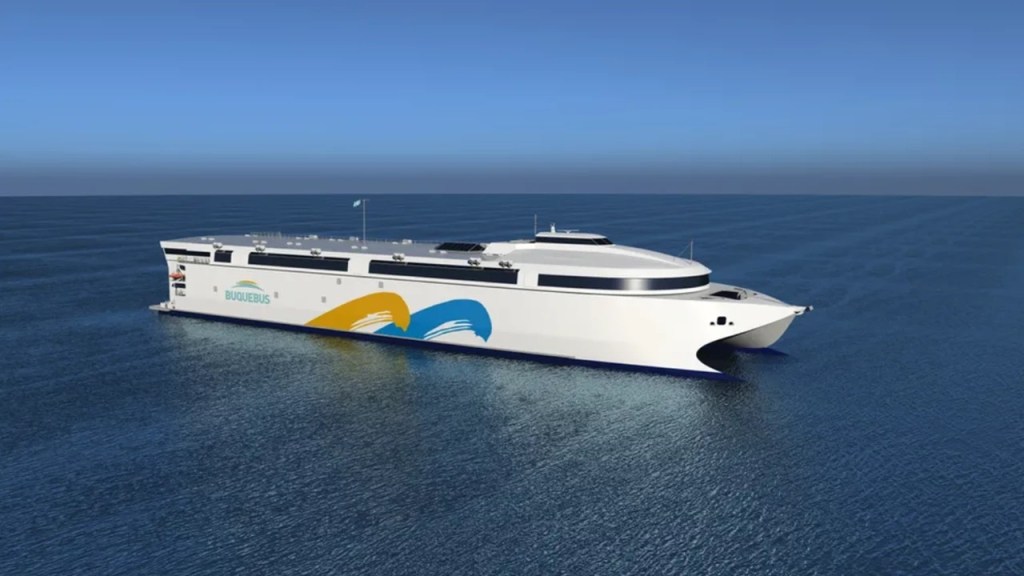
La iniciativa, que contempla un préstamo de $107 millones del Banco Santander Uruguay y una garantía parcial de crédito de $67 millones de la IFC, apunta a establecer un nuevo estándar en términos de sostenibilidad y eficiencia en el transporte marítimo. Con una capacidad para 2.100 pasajeros y 225 vehículos, el e-ferry contará con duty-free, restaurantes y otras instalaciones de primera clase, ofreciendo una experiencia de viaje única para los pasajeros.
Además, el proyecto tiene como objetivo lograr una reducción significativa de las emisiones de gases de efecto invernadero, estimada en 37,545 toneladas de dióxido de carbono (tCO2e) por año. Para ello, Buquebús invertirá $14 millones en infraestructura para las estaciones de carga y transmisión de electricidad, garantizando un funcionamiento eficiente y respetuoso con el medio ambiente.
La construcción del ferry China Zorrilla, está a cargo de Incat Tasmania Pty Ltd., un astillero australiano reconocido por su compromiso con las energías renovables. Este enfoque en la movilidad eléctrica y la renovación de flotas fluviales se alinea con los compromisos de Uruguay y Argentina bajo el Acuerdo de París, demostrando un firme compromiso con la transición hacia una economía más sostenible.
El presidente de Buquebús, Juan Carlos López Mena, destacó la importancia de esta inversión para el futuro del transporte marítimo en la región, subrayando la necesidad de adoptar tecnologías de vanguardia para reducir las emisiones y promover la eficiencia energética. Asimismo, el country head de Santander Uruguay, Gustavo Trelles, resaltó el compromiso del banco con el financiamiento sostenible y su colaboración de largo plazo con Buquebús en la búsqueda de soluciones innovadoras para el sector.
En definitiva, la construcción del ferry eléctrico más grande del mundo representa un paso significativo hacia un transporte marítimo más limpio y sostenible en Argentina y Uruguay. Con una inversión sin precedentes y un enfoque claro en la reducción de emisiones y la eficiencia energética, este proyecto sienta las bases para un futuro más prometedor para la industria naviera en la región.
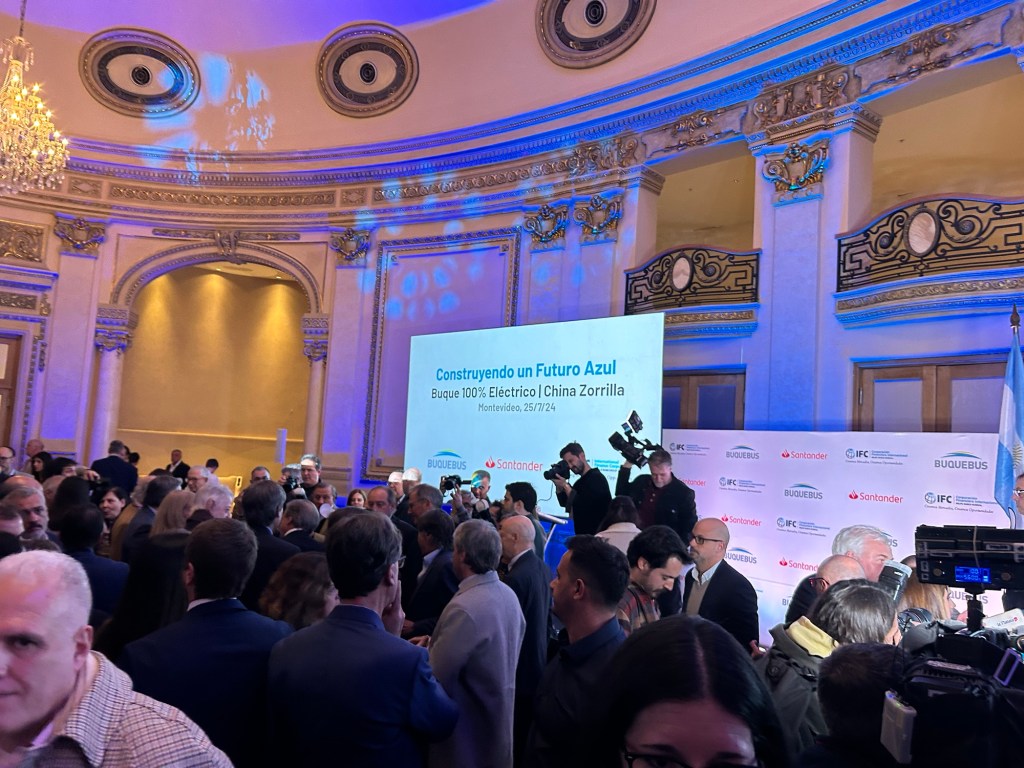
Last Thursday, July 25, BUQUEBUS presented in the halls of the SOFITEL Hotel of Carrasco in Montevideo the new largest electric boat in the world, which will be called China Zorrilla in homage to the beloved Uruguayan actress who united the two banks of the Plata.
The maritime transport sector in Argentina and Uruguay is experiencing a significant boost with the construction of the largest electric ferry in the world, which will link the cities of Buenos Aires and Colonia del Sacramento.
This mega investment of more than 170 million dollars, led by Buquebús and Banco Santander with the financial support of the International Finance Corporation (IFC), marks a milestone in the region’s shipping industry.
The initiative, which includes a $107 million loan from Banco Santander Uruguay and a partial credit guarantee of $67 million from the IFC, aims to set a new standard in terms of sustainability and efficiency in maritime transportation. With a capacity for 2,100 passengers and 225 vehicles, the e-ferry will feature duty-free, restaurants and other first-class facilities, offering a unique travel experience for passengers. Additionally, the project aims to achieve a significant reduction in greenhouse gas emissions, estimated at 37,545 tons of carbon dioxide (tCO2e) per year. To this end, Buquebús will invest $14 million in infrastructure for charging and electricity transmission stations, guaranteeing efficient and environmentally friendly operation. The construction of the China Zorrilla ferry is being carried out by Incat Tasmania Pty Ltd., an Australian shipyard recognized for its commitment to renewable energy. The president of Buquebús, Juan Carlos López Mena, highlighted the importance of this investment for the future of maritime transport in the region, underlining the need to adopt cutting-edge technologies to reduce emissions and promote energy efficiency.
Likewise, the country head of Santander Uruguay, Gustavo Trelles, highlighted the bank’s commitment to sustainable financing and its long-term collaboration with Buquebús in the search for innovative solutions for the sector.
Ultimately, the construction of the largest electric ferry in the world represents a significant step towards cleaner and more sustainable maritime transport in Argentina and Uruguay. With unprecedented investment and a clear focus on emissions reduction and energy efficiency, this project lays the foundation for a more promising future for the shipping industry in the region.
 QUE HACER EN BA